Chris’ story: Stop Chasing Work-Life Balance…Create Work-Life Flow Instead.
Work-life balance may be keeping you stuck. Work-life flow — built on small experiments and aligned Superpowers — changes everything.
Five years ago, Chris made a decision most professionals quietly postpone.
He didn’t wait for burnout.
He didn’t wait for redundancy.
He didn’t wait for a crisis.
He noticed the weight of stuckness — that subtle sense of Is this it? — and chose to redesign how he approached his work life.
After working through Lucia Knight’s work-life redesign process, he distilled everything down to three lessons he never wants to forget.
They’re not motivational slogans.
They’re hard-won insights.
And they now guide every decision he makes about work.
Lesson One: Stop Chasing Balance. Create Flow.
For years, Chris believed the goal was work-life balance.
Two separate entities. Carefully managed.
But through the redesign process, he realised that framing was wrong for him.
He doesn’t want balance.
He wants flow.
Flow means work and life aren’t opposing forces. They move together. If work is aligned with his Superpowers — if it energises and challenges him — then it doesn’t need to be “balanced out.” It fits naturally into the whole.
That shift changed how he evaluates everything.
Now he asks:
Does this fit how I want to feel?
Does this belong in the life I’m designing?
If something doesn’t fit, it changes — or it goes.
No dragging it along out of obligation. No losing sleep over it.
That constant, conscious design is what replaced his stuckness.
Lesson Two: Everything Is an Experiment.
This lesson removed fear from the equation.
Before, decisions about work carried weight. Senior professionals often feel that every move must be strategic, flawless, justified. The stakes feel high.
Through his work with Lucia, Chris adopted a different operating system:
Everything is an experiment.
If something works — great.
If it doesn’t — it’s data.
There’s no failure state.
This mindset gave him permission to try new projects, explore opportunities, adjust structures, and refine his approach without the pressure of permanence.
It also revealed something essential about himself:
He needs variety.
He thrives on solving new problems, streamlining systems, improving processes for people. He can do something once — maybe twice — but repetition without fresh challenge drains his energy.
That’s not a flaw. It’s a design parameter.
Now, when he feels boredom creeping in, he doesn’t blame himself. He recognises it as a signal to adjust the experiment.
Curiosity replaced paralysis.
Lesson Three: The People Matter More Than the Targets.
Perhaps the deepest insight he never wants to forget is this:
The people matter.
Chris realised that appreciation is not a bonus feature of work. It’s essential.
He doesn’t want to be a cog delivering numbers to a board. He wants to work with people who care about what he’s doing for them. People who visibly value the contribution. People whose lives are enhanced in some way by the work.
That human response — the look, the body language, the genuine appreciation — fuels him.
Without it, work feels hollow.
With it, it feels meaningful.
Understanding that about himself sharpened his ability to identify Kryptonite environments. Impressive titles without appreciation? No longer appealing. High status without human connection? Not worth it.
That clarity guides his choices now.
The Result: He Knows What “Right” Feels Like
When asked what aligned work feels like, Chris described something striking.
He compared it to listening to a beautiful piece of music — that whole-body uplift, the tingling at the back of your neck.
That’s now his internal barometer.
When his work life includes:
Flow instead of forced balance
Variety instead of stagnation
Appreciation instead of invisibility
He feels that lift.
And because he’s done the deeper self-understanding work, he trusts that sensation.
He doesn’t override it.
He doesn’t rationalise against it.
He uses it to design forward.
Why These Three Lessons Matter
These lessons didn’t appear overnight.
They’re the result of structured reflection, identifying Superpowers, recognising Kryptonite, experimenting deliberately, and redefining success in midlife.
Chris didn’t torch his career.
He redesigned how he approaches it.
Five years later, these three lessons remain front and centre. They are the guardrails that prevent drift. The reminders that stop him sliding back into autopilot.
And perhaps that’s the real outcome of this work:
Not a dramatic change.
But a durable internal framework for designing work that matters — for as long as you choose to work.
For professionals in their 40s, 50s and beyond, that clarity can be the difference between drifting through the next decade — and entering it with energy, intention, and a growing sense of joy at work.Curious What Joy at Work Might Look Like for You?
Whether you’re wrestling with loyalty, craving a change you can’t yet name, or simply wondering if it’s too late to do something more meaningful—this story is proof that clarity is possible.
🔗 Explore how you can begin your own career redesign journey: Work With Lucia
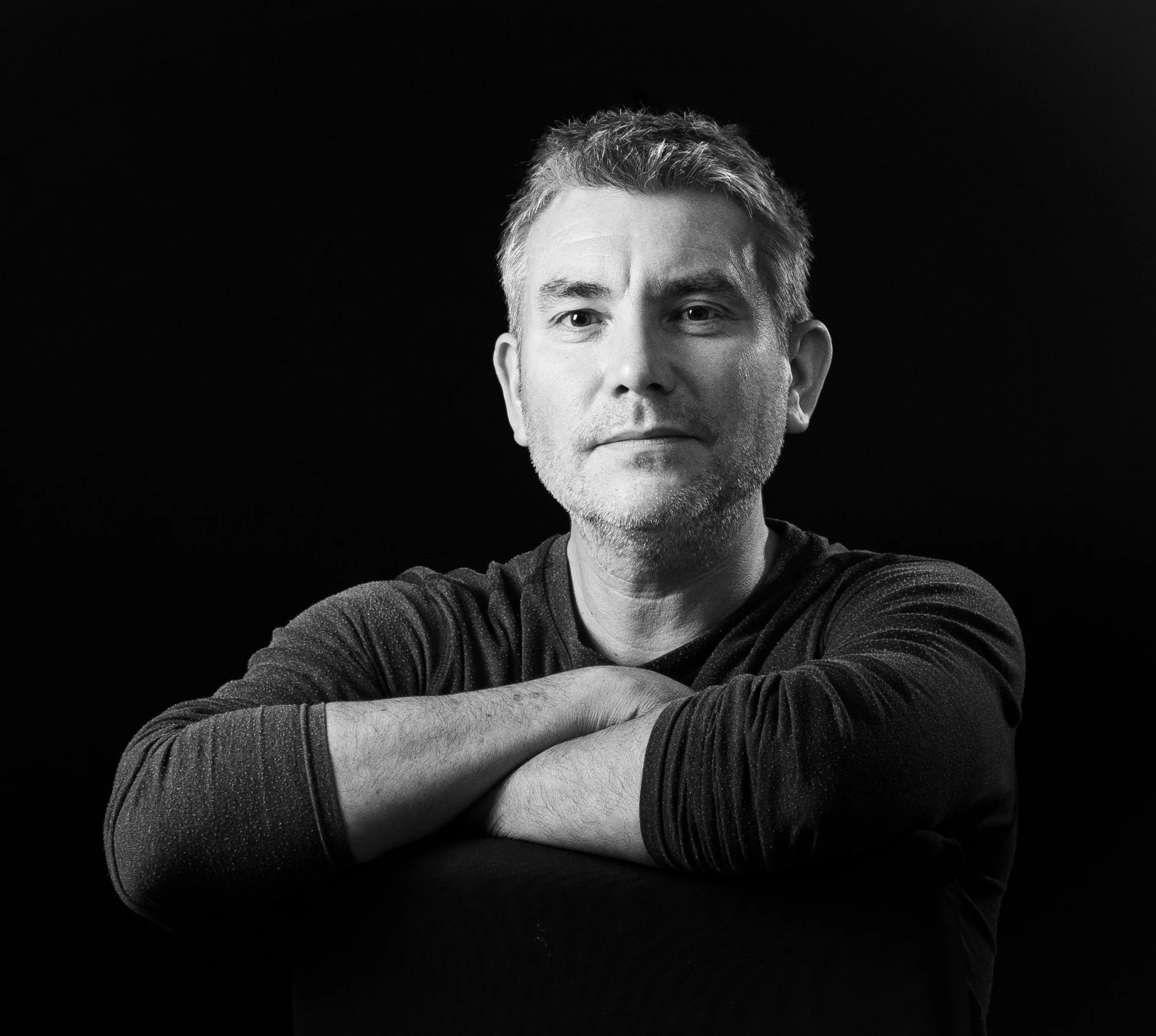
Chris Mount: Bright Rise Photography.
Find out more about one of Chris’ two businesses :
-
3 Lessons on Work-Life Flow: Former Client Chris on Designing Work That Gives You Tingles
[00:00:00] Welcome to Joy At Work + why this conversation matters
Lucia Knight: Hi, I'm Lucia Knight and this is the Joy At Work Podcast.
Today I'm joined by one of my former clients, someone who, like so many of us, had a moment of weight. Is this what work is supposed to feel like? And instead of brushing it off and cracking on, they paused and they chose to design their work life differently.
I've asked each guest to share the three most important insights they learned about their future work life that they never ever want to forget. And these aren't just light reflections. They're the result of three, six, or 12 months of deep work together, and now they're in a position to capture those timeless notes to their future selves.
For some saying yes to my invitation, took a little bravery. A lot of what I call powerful vulnerability. Some had to dig deep because they really value their privacy. Some said yes because they understood the potential power of having a touch point to return to every year. But mostly they said yes as an act of kindness gifted to me and to you.
Let's dive in.
[00:01:16] Insight #1: Stop chasing balance—create work-life flow
Lucia Knight: Chris, I am so curious. What is the very first thing that you never, ever want to forget about your future work life.
Chris: So after a lot of thought I'm not looking to achieve a work-life balance. I am looking for a work-life flow. So this is very much about work and not work, finding a natural balance. And so I don't have to consider them as being separate different entities, but as a kind of fluid partnership of the two.
So I don't want to have to treat them as different things because if I'm enjoying work as I should be enjoying work and finding it fulfilling, then it should just fit perfectly into the natural whole of my life.
Lucia Knight: Yes.
[00:02:08] Designing your life in real time: keep what fits, drop what doesn’t
Chris: and I think if something isn't working, if something doesn't fit into that way of being, then I either change it or I drop it.
I don't lose sleep over it
Lucia Knight: So you are literally designing all the time. So new things can come in, but if they don't fit, they come out.
Chris: Exactly that. It's a constant assessment of every little thing. Does it fit into how I want to be and feel? And if it doesn't, then it changes or it goes, it. There's no hanging about with it.
Lucia Knight: you sound as if you're very clear about how you want to be and feel.
Chris: Because I've achieved what I wanted to be and feel. Now, I couldn't have told you necessarily upfront, verbally, what that was, but having been through the process of exploring with you and with within myself, what I'm about, and how I've now arrived at somewhere that I find to be working perfectly for me.
I can then analyze that retrospectively and say, yes, this is the process that I have adopted, partly through design and partly through just trial and error, and that works for me.
Lucia Knight: Lovely, Lovely, Okay, so what is the second thing that you never want to forget about your work life?
[00:03:33] Insight #2: Variety, challenge, and an ‘everything is an experiment’ mindset
Chris: So the second thing is that variety really is the spice of my working life.
I've always got been the sort of person that gets bored easily, and I need fresh challenge. I work best when looking for a solution to a particular problem. Or streamlining something to make it work better or making something better for someone else.
Lucia Knight: Yeah.
Chris: And I'll do it once. I'll possibly do it twice, and by the third time, if it's too similar, I'm bored. And at the point that I'm bored, I lose the energy, I lose the drive, and I, I will basically just get lax with it and it doesn't do anyone any favors. So I need a variety of projects, types of work different people interactions.
To keep me energized and driven and performing best for myself and those that I'm working for. And it doesn't particularly matter what the problems are that I'm dealing with so long as they're challenging, varied and fresh. And as one of the things that you taught me and that we talked about a lot that resonated a lot was that everything is an experiment.
So there isn't a failure state. So I'm always open to new opportunities and I very rarely say no.
Lucia Knight: Because you're always experimenting.
Does this work? Does this
Chris: feel good?
Because I'm always experimenting. You learn from your failures.
I don't consider them failures, but if it doesn't work out to a state that you wanted it to, you learn from that. You can analyze and make yourself better. You can determine that actually the experiment wasn't one you wanted to repeat anyway, so you won't do that again. You can just evolve in a controlled way.
So that's what I'm all about now is the variety of experimentation the, does it work for me?
Lucia Knight: Fabulous. Okay. Now, what's the very final thing that you never want to forget in your future work life?
[00:05:28] Insight #3: The people matter—work with clients who truly care
Chris: You know me, so this probably won't come as a surprise, but it's that the people really matter. It's all point number three is all about the people I work for and the people I work with. And I need to be working for people who care about what I'm doing for them, like properly care, not just a target on a board, not just a financial achievement for a director.
I wanna be working for people who clearly show that what I've done for them has enhanced their life in some way or giving them something that gives them pleasureI don't know, just you get a view of someone that you really have done something that they appreciated in the eyes and the body language that you can't get from a job that isn't for someone that's feeling like that.And as long as I have that, it's a really key component to how fulfilled and pleased I am to be doing the job.
Lucia Knight: I, and that's always been, I know we've known each other for a long time, but that's always been one of your core drivers, so it's fabulous that you find a way to make that work for you and fresh people.
[00:06:41] How it feels when it all clicks (the music-tingles moment)
Lucia Knight: So my very final question is, when you get to do work that allows you to feel that perfect level of work life flow for you, and you get to work on fresh, new problems for people who really care about the work that you're doing for them, how does that feel?
Chris: I am a music lover. We would've spoken about this at some point with way distant past. But for me, there's a feeling that I get when I listen to a beautiful piece of music and it's a whole body, it's a tingling in the back of the neck. It's a sort of an uplift. And that's the feeling that I get in some way when all of those three things and others that when all those three things are present in what I'm doing and there's nothing else like it.
Lucia Knight: Wow. I just got tingles. Designing Work That Gives You Tingles
Chris holds a special place in my heart because five years ago he was one of the very first. 12 people in the world who trusted me enough to join the pilot of my six week work life redesign program. That program became the Fierce Accelerator and it mixes online learning, small group training, and dedicated one-to-one time with me.
Designed to help you make real change without burning your life down. You'll find details in the show notes of the three ways you can work with me so that you can choose what fits your appetite for change, how quickly you want to feel momentum, and yeah, your budget so that you can design work you might enjoy for as long as you choose to work.
